Seventy Years Apart, the Same Mistake: Painter’s Folly and Mother Archie’s
© Ed Worteck
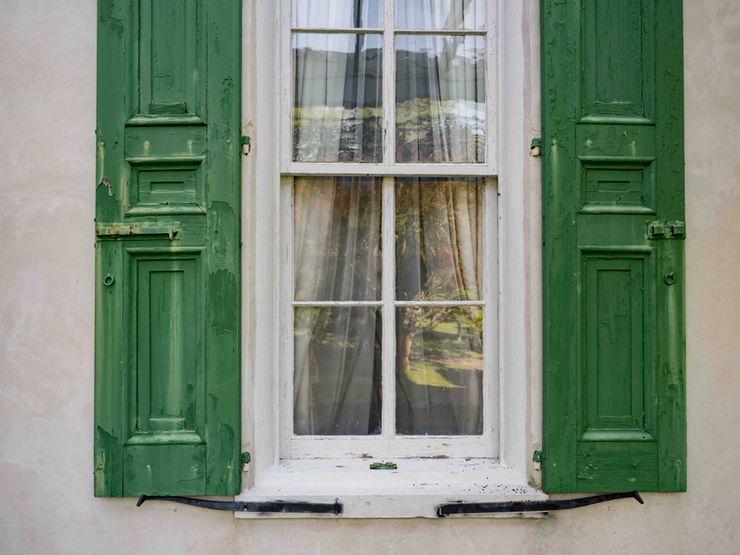
On Thursday, October 22, Chadds Ford Township will sell Painter's Folly at public auction. The c. 1856–57 Italianate house on Baltimore Pike, where Howard Pyle ran his summer art school and where Andrew Wyeth painted for twenty years, will go to the highest bidder, "as is," subject to the Township's confirmation.
The Township bought the property from the Sipala family in 2018, using Open Space funds to preserve it. Now it is letting it go. For anyone familiar with Chadds Ford history, that arc sounds familiar. Seventy years ago, the same Township, then called Birmingham, took another Wyeth-country landmark into its care: the octagonal stone church at Archie's Corner, known as Mother Archie's.
Archie's Corner
In 1891, Lydia A. Archie, an ordained preacher in the African Union Methodist Protestant Church, purchased the former Bullock octagonal school at Bullock and Ring Roads. She led the congregation there for 40 years, until her death in 1932. With no successor, the church gradually disbanded, and the property declined.
In 1944, Delaware County took the property for unpaid taxes. Local landowner John Bechtel bought it and later conveyed it to Birmingham Township. By the mid-1950s, the Township's plans for the site worried the church's descendants. Forty of them petitioned the supervisors to return the property to the Black community, and in 1955 three church trustees sued. The court upheld the Township's ownership, required it to maintain the cemetery, and left the rest of the property free for the Township to use as it wished.
In November 1956, fearing the Township would dispose of the schoolhouse, Bechtel wrote to the Township saying, “I offered the Schoolhouse to the Supervisors not as a general gift but as an historical site which I considered should be preserved for the benefit of the Public… I regret exceedingly that the Octagonal Schoolhouse was not converted to a public use as we had dreamed… My hope is that eventually the Public will realize that this property is important to them for public use, and that then I shall have the opportunity of once again conveying it to the Township of Birmingham.”
That never happened. By 1959, the roof was gone, the adjoining frame house Wyeth tried to buy for its tenants had been torn down or burned, and the octagon had crumbled for decades. Restoring it in the 1950s would have cost about $10,000. The Township didn't stabilize what remained until 2003. Today the ruin is a well-kept park, and the cemetery survives, but the building Bechtel hoped to save does not.
The Similarities
The two stories rhyme in ways that are hard to ignore:
Acquired to preserve. Bechtel donated Archie's Corner to the Township in 1953 to be preserved. The Township bought Painter's Folly with Open Space money for the same reason. In both cases, public ownership was meant to protect it.
Then the Township let go. In the 1950s, Birmingham Township weighed converting the schoolhouse into a public hall but abandoned the plans by September 1956. In 2026, Chadds Ford Township is auctioning Painter's Folly outright.
Wyeth was there. Andrew Wyeth painted Archie's Corner from age 16 and insisted that the County’s seizure of the property was illegal. Painter's Folly was his studio and subject for two decades.
The community pushed back. Descendants petitioned and sued over Mother Archie's. The Painter's Folly Preservation Alliance organized, attended hearings, and searched for a buyer who would care for the house.
Money decided it. Archie's Corner was never developed or restored, apparently because of a lack of funds. Painter's Folly, a 6,970-square-foot house, now passes to whichever private bidder is willing to take on its upkeep.
Where the Stories Differ
In September 2026, the Township recorded a perpetual conservation easement and a façade easement with the North American Land Trust. The lot cannot be subdivided. The easements protect the front and side façades, the cupola, and the wraparound porch, while preserving views from Route 1 and Brandywine Battlefield Park. Most strikingly, the deed expressly prohibits demolition by neglect—the very fate that claimed the octagon at Archie's Corner.
The differences are worth noting. The easements protect the exterior and the land, but not the interior or its furnishings—including pieces depicted in Wyeth's paintings of the Sipalas. As with the frame house at Archie's Corner, which was left unprotected, the rooms Wyeth painted at Painter's Folly now depend on the goodwill of whoever buys them.
Not a Coincidence, a Pattern
It's comforting to dismiss these two stories as mere bad luck, but they aren’t. They’re the same township, under two names, repeating the same mistake seventy years apart. Birmingham Township accepted Archie's Corner as a historic site, then fought in court over building a town hall beside a cemetery. It let the octagon stand roofless for decades and didn’t stabilize it until 2003. By then, little was left to save.
Chadds Ford Township bought Painter's Folly in 2018 with Open Space funds and pledged to preserve it. Eight years later, it’s up for sale. The town recorded the protective easements in September 2026, just weeks before the auction. A Preservation Plan for the house has been in place since December 2021. And when residents asked at the August 12 meeting about protecting the interior and the furnishings Wyeth painted, the final easements excluded them.
That is not stewardship. It is a township that knows how to acquire a landmark but not how to keep one. Each time, it takes ownership with fanfare, offers no lasting plan or budget for care, and then treats the property as a burden to manage or offload. Protections arrive late, under public pressure, and only to the extent required.
The similarities point to a bigger problem. Small local boards and municipalities oversee some of Pennsylvania's most important cultural sites, often with limited preservation expertise and no long-term funding. Public ownership becomes a holding pattern rather than a promise. And the people who care most, from Mother Archie's descendants to today's Preservation Alliance, end up fighting their own government to protect what it said it would protect.
Further Reading

Comments